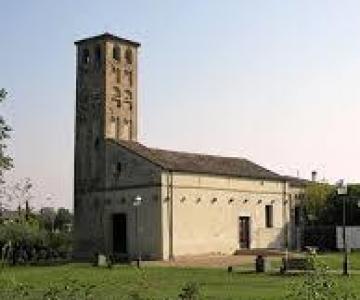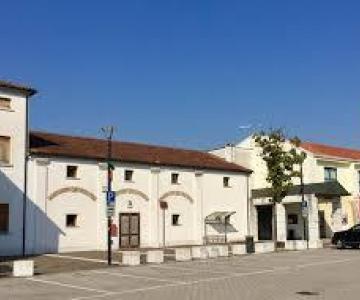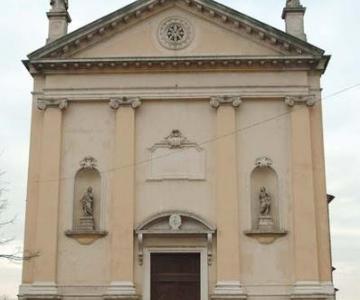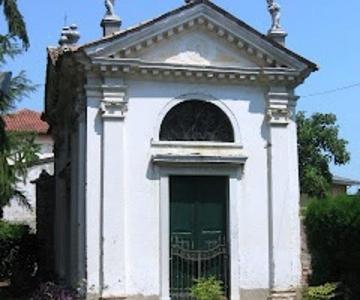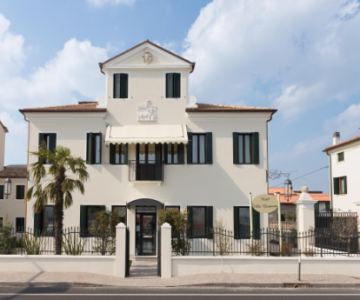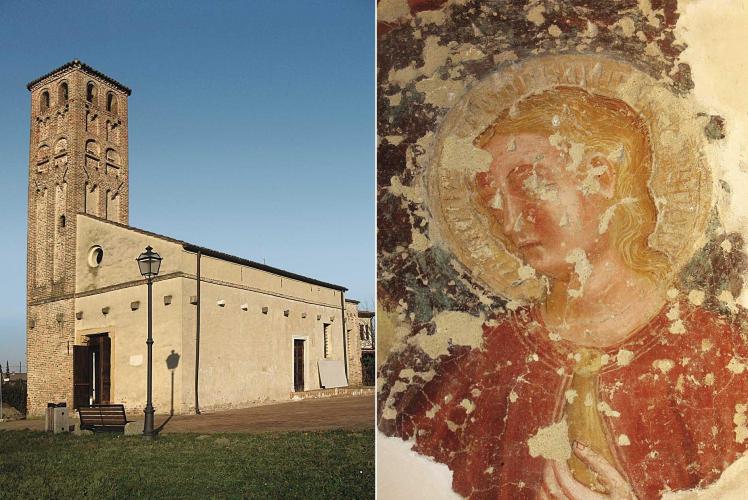
Wanted by the municipality of Campagna Lupia and realized thanks to the collaboration of the Archaeological Superintendence for Veneto, the museum is located within the Church of Santa Maria di Lugo and collects the Roman and pre-Roman testimonies discovered in the temple of Lova.
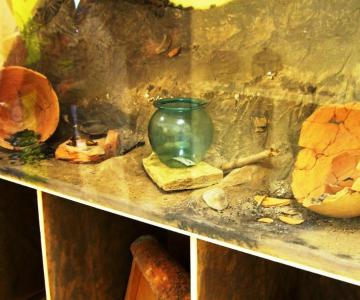
Among the archaeological materials brought to light during the excavations conducted between 1990 and 1993, there is a considerable amount of votive bronzes, some coins, four gold rings, fragments of ceramics, and some parts of terracotta decorations from the sanctuary. The bronzes constitute typical expressions of
popular devotion: lacking artistic ambition, they are statuettes a few centimeters tall made by casting bronze into molds.
The figurative scheme is simple: the majority of the bronzes depict nude male devotees with outstretched arms and spread legs. Regarding the four rings, the most precious one is decorated with a cameo in white glass paste on a green background depicting an eagle attacked by a serpent; the second is characterized by a setting of blue glass paste engraved with the goddess Roma seated; the third is decorated with an engraved spikelet, while the fourth bears the inscription “Ostis,” of uncertain interpretation.