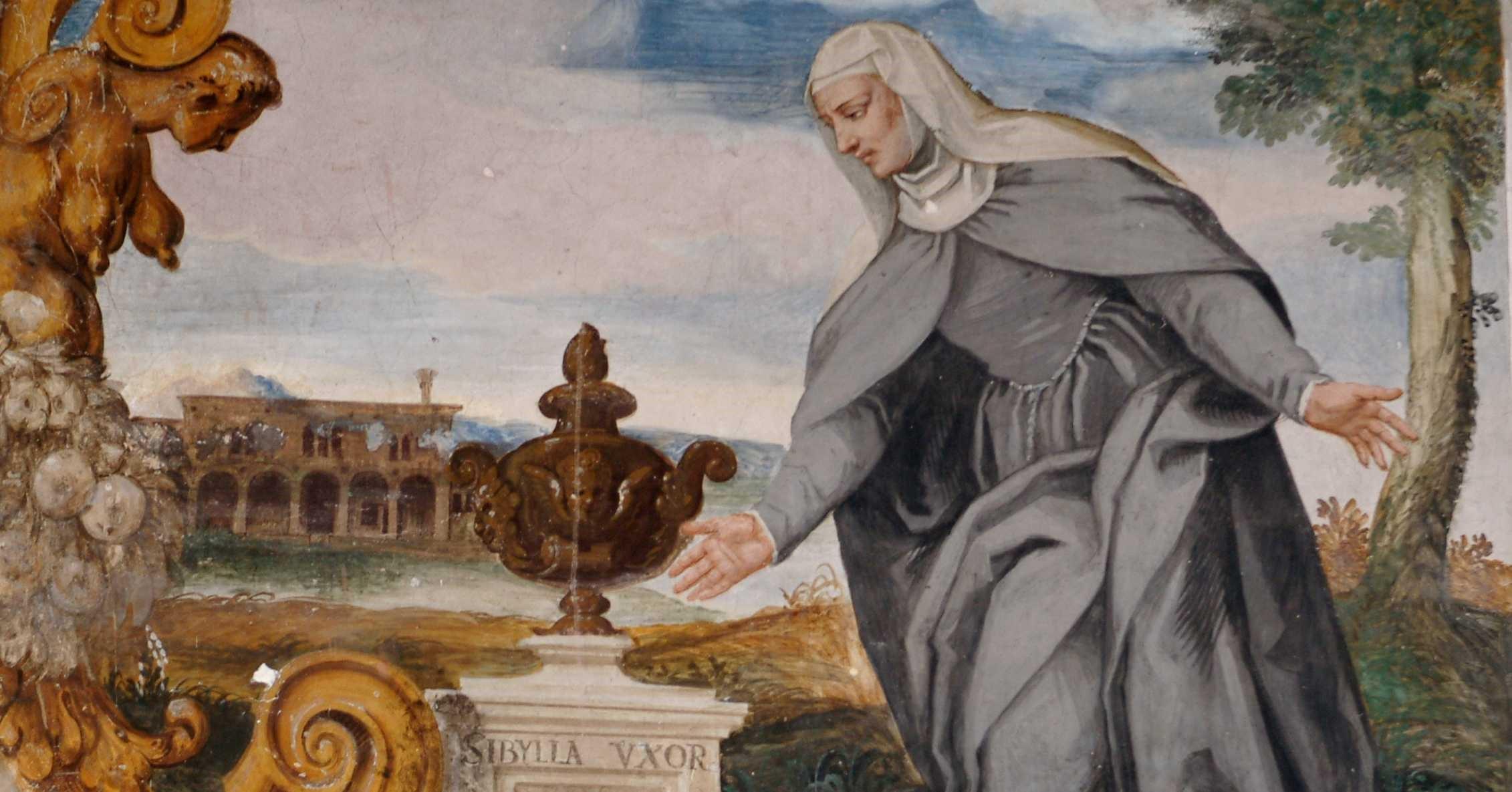
After the saint’s death, his body was transferred to the Basilica of St. Anthony. However, even though it no longer had the mortal remains of Il Santo, Arcella remained one of the centres of popular devotion in the city – both because it was where St. Anthony had died and because it was already associated with veneration of the Blessed Elena Enselmini, who is one of the minor ‘patron saints’ of the city; she had lived and died in the convent of Santa Maria della Cella, where she is buried.
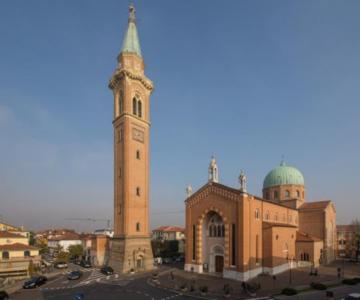
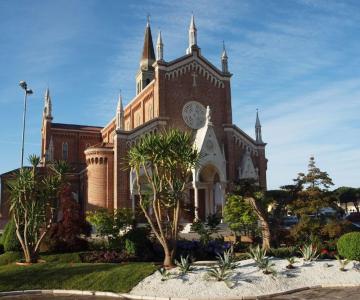
Solemn and austere, the present-day sanctuary also has a certain luminous warmth thanks to the extensive use of brick within the structure. One of the more interesting examples of the Neo-gothic style inspired by medieval Franciscan architecture, it is the work of Eugenio Maestri and Nino Gallimberti, who followed on from each other in directing the project over a period that runs from 1886 to 1931.
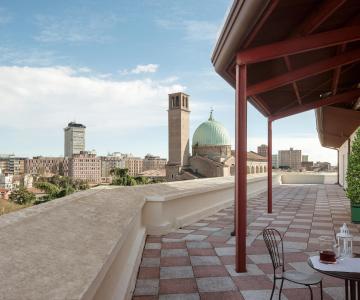
The bell-tower next to the church was designed in the years 1898-1899 by the local architect Agostino Mozzo. The large statue of St. Anthony – the work of the Veronese sculptor Silvio Righetti – was installed at the top of the tower when it was finally inaugurated, in 1922.
The interior has a single nave and transepts, all with ribbed vaulting, the upward thrust of the space culminating in the light-filled cupola, which stands 40 metres high. At the far end of the interior, the space ends in a large apse containing the choir.
The focal point of the sanctuary is, of course, the monastic cell where St. Anthony died. This is decorated with a single statue of the dying saint, created in 1808 by the sculptor Rinaldo Rinaldi.


Santuario Antoniano dell'Arcella
Via Ludovico Bressan, 1 , Padova - 35132
- Contacts
- Links
TAKE ME HERE: Via Ludovico Bressan, 1