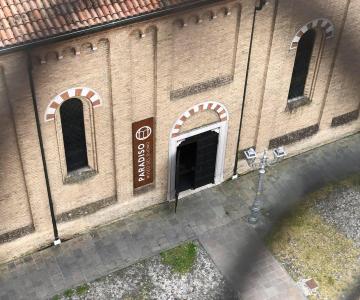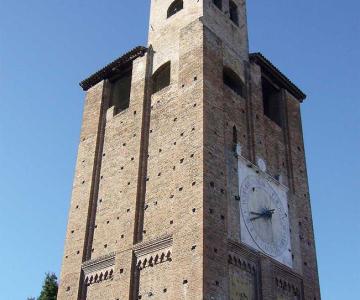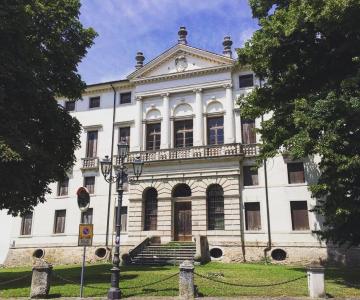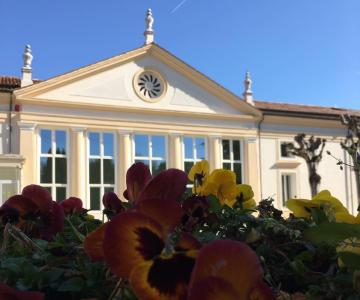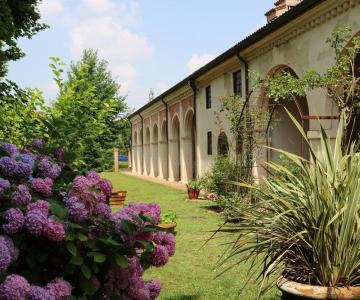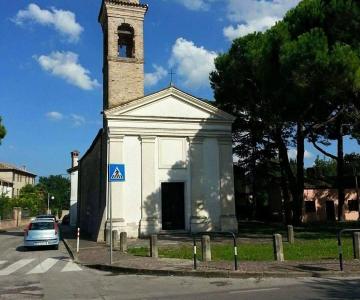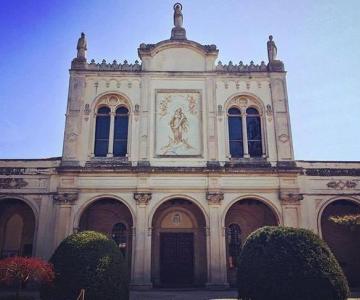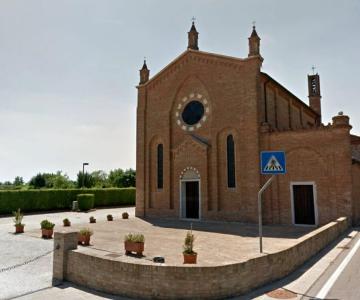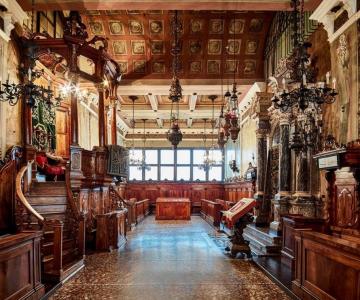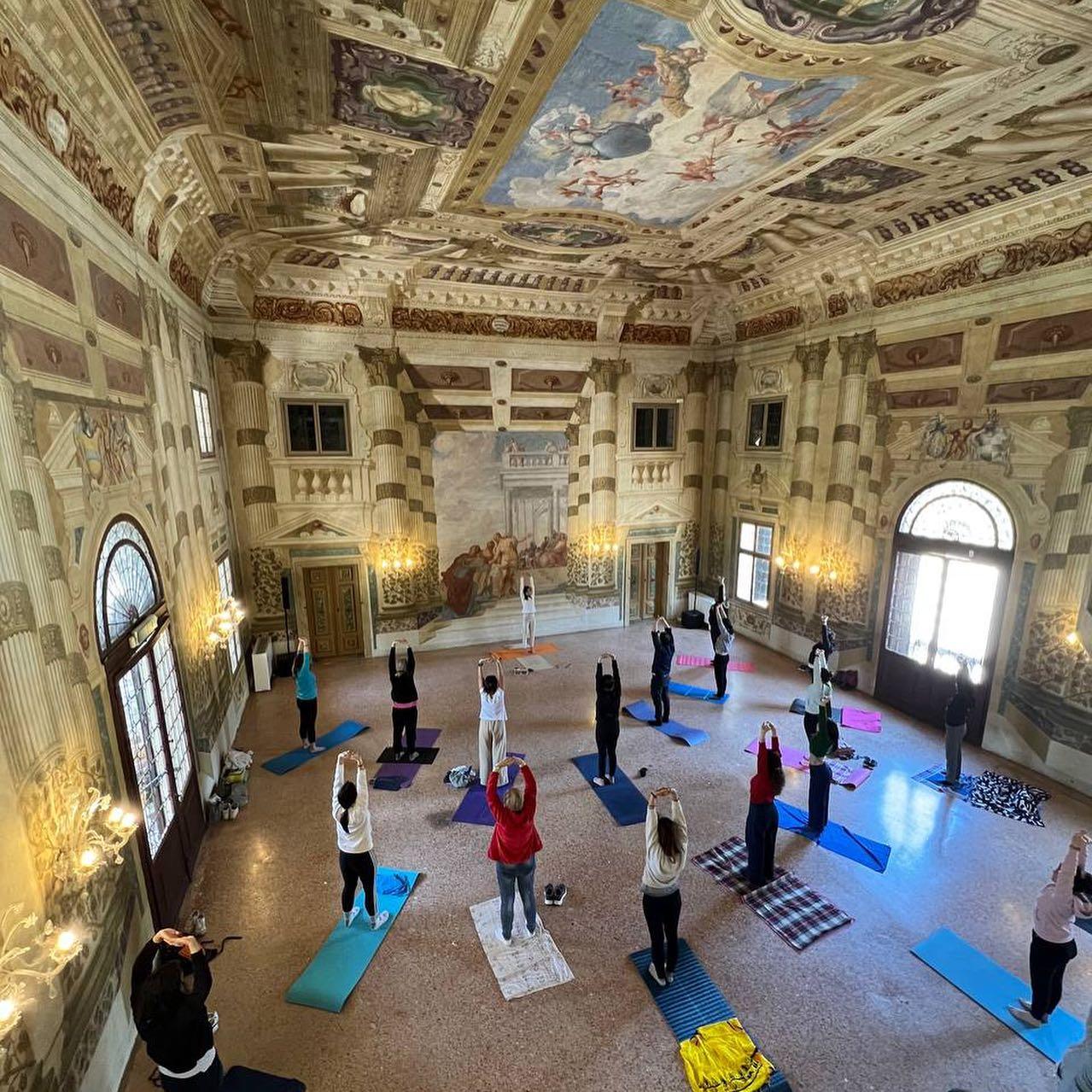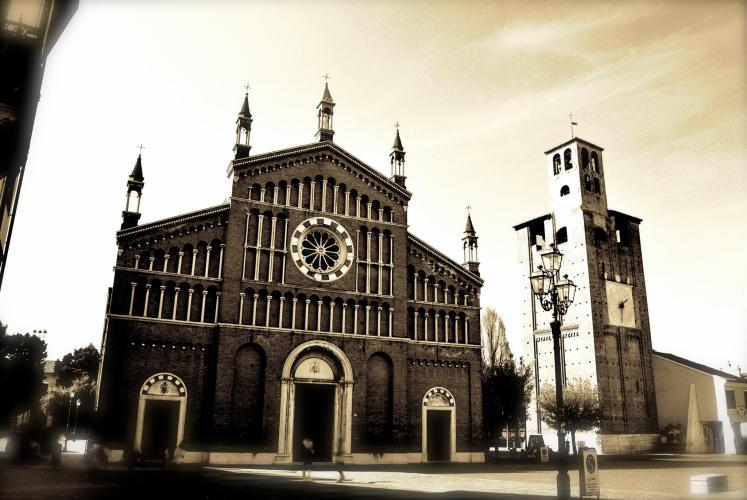

The cathedral complex consists of three main rooms: the cathedral dedicated to St. Martin, the Chiesola or St. Mary of the Penitents, connected by the large sacristy, and the Oratory of Paradise.
Although the whole complex has been heavily remodeled, it is worthy to dwell briefly on its history of which valuable, though sporadic, documents and several works, especially paintings.
According to the accurate studies of Peter Pinton, it would belong to the Church of St. Mary Mother of God and St. Thomas the Apostle the title of the first church in Villa di Sacco, documented as early as about 840.
In 1090 the Bishop of Padua and Count of Piove di Sacco, Milone, wanted to give Saccisica a new and larger religious building. This was it, the church wanted by Milone, built in Romanesque-Lombard style with a basilica plan with three naves and a facade facing west. By 1334 the church of St. Mary Mother of God was falling apart, and it was therefore decided to rebuild it under the name of St. Mary of the Penitents; with the occasion
the newer church of St. Martin asserted its rights over it by annexing it also physically to itself by means of a new building, which, rising on the site then occupied by the cemetery, took the name “Paradise”.
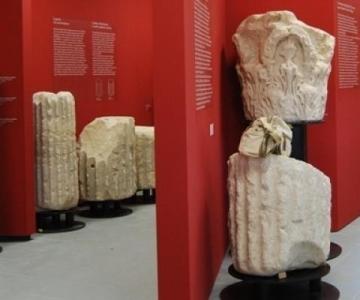
In the present complex of the Church of St. Martin, fragments of the ancient artifacts are preserved, including tombstones with inscriptions, mosaic remains of the ancient floor built of marble tiles, as well as some marble bas-reliefs. Still other works decorate the cathedral: on the second altar to the right is Giambattista Tiepolo's “Madonna of Carmel” altarpiece; on the fourth altar is placed “Rest during the Flight into Egypt”, a recently restored canvas, by the painter Sante Piatti. Another jewel of this church is the altar of the Blessed Sacrament placed in the chapel to the left of the altar major, a work by Jacopo Sansovino dated 1554.
Of slightly different size and slightly different style from each other are the five canvases above the side and front doors. Beginning with the scene on the door right, thus also following a chronological order, we find three episodes related to the life of the Virgin: the Birth, the Presentation of Mary in the Temple and the Assumption; on the counterfacade wall we also find the Adoration of the Shepherds and the Adoration of the Magi.
The building was built on the site of the ancient parish church in Romanesque style with Gothic elements, following a typically 19th-century taste.