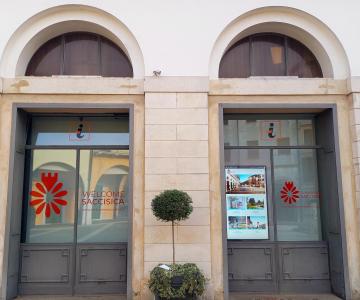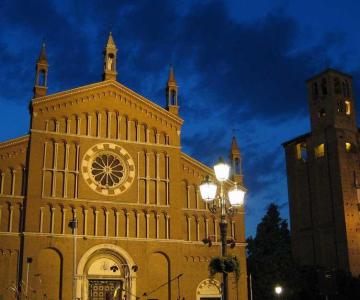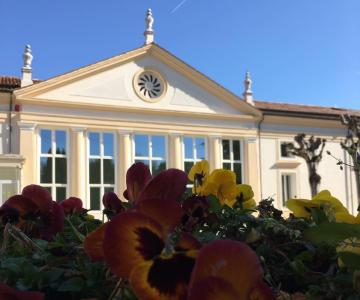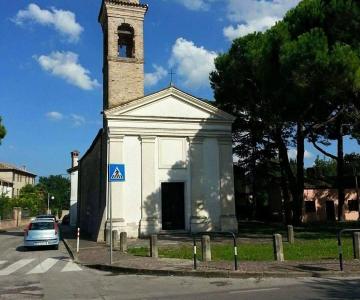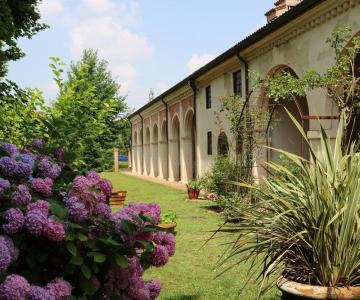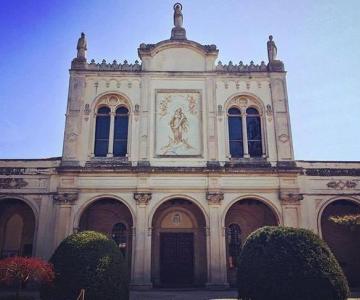
The Palace is home to the municipal house.
Open every morning from Monday to Friday, it can be visited by contacting the CTG Saccisica association.
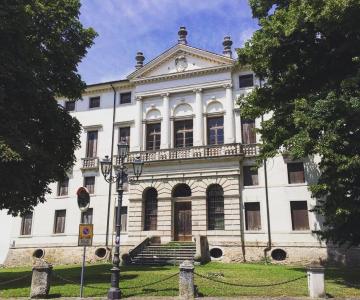
The building was constructed between 1821 and 1823, designed by architect Giuseppe Jappelli, in place of the previous Palazzo Pubblico of Carrara origin.
The main elevation is cadenced by window openings and arches on the first floor.
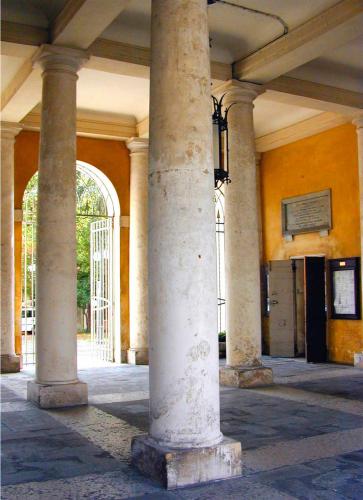
The facade slightly widens the perspective toward the main square, forming a public space where it stands out in compact and regular block. The elegant atrium consists of a passing hall with columns that pick up the façade rhythm.
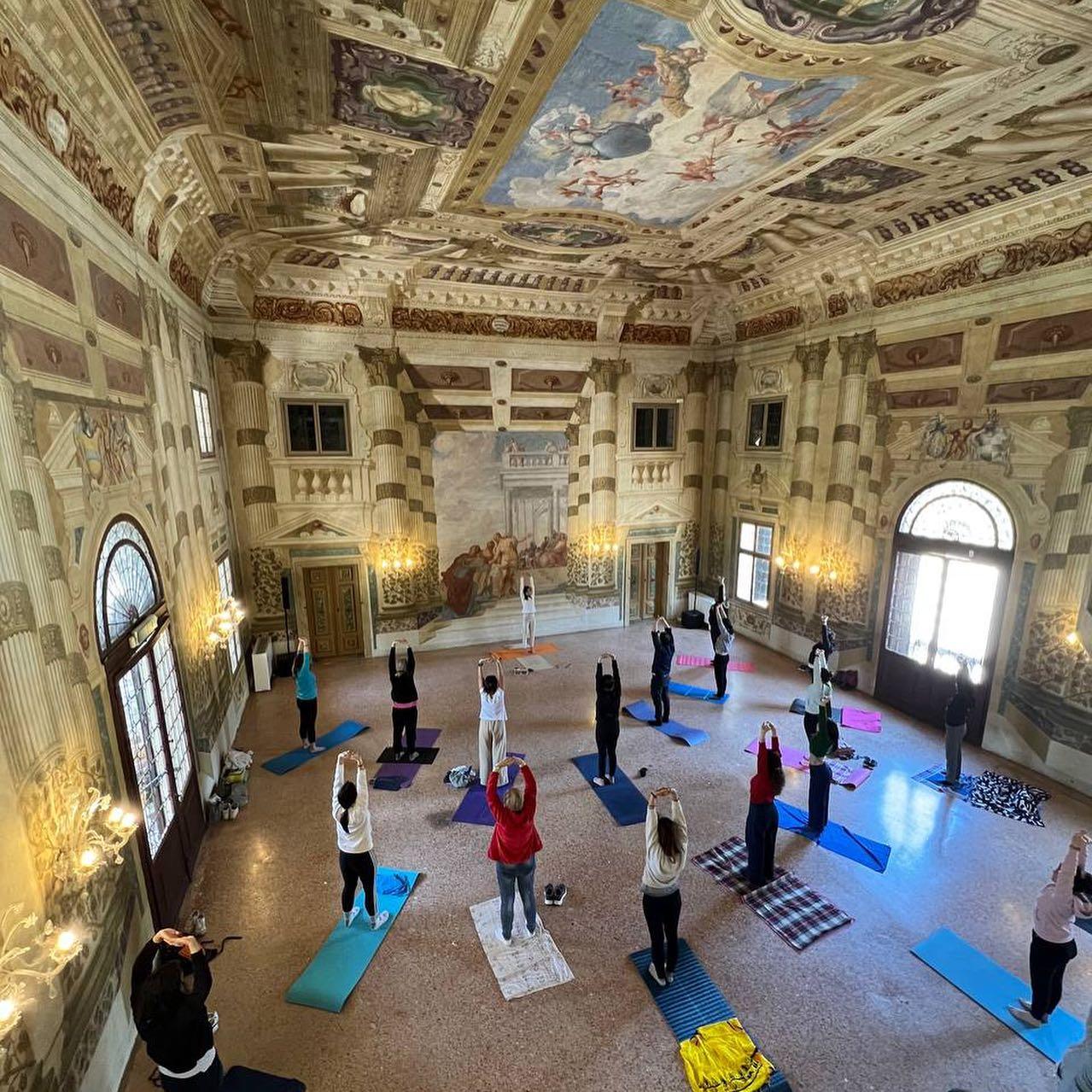
Going up the grand staircase to the right, one reaches the main floor where the representative rooms are: the Hall of the Magnificent Community or Council Room, the Pomegranate Room (Mayor's office), and the office of the General Secretary.
In the Council Chamber, within large stucco frames are placed four canvases made in 1994 by painters Gabrie Pittarello and Marina Ziggiotti and painters Mario Pastore and Ottorino Stefani following a competition announced by the municipal administration.
Other works of considerable interest are placed in the same room: a 14th-century wooden crucifix found in the civic tower; a stone bas-relief depicting St. Martin and the poor man (the Municipality's coat of arms).
In the adjoining Sala Melograni, an entire wall is occupied by the large canvas that formed the curtain of the Philharmonic Theater where the Entrance of the Italian troops into Piove di Sacco is depicted.
On the left wall (looking at the curtain) is an interesting collection of the coats of arms of the city of Piove di Sacco: a large eighteenth-century St. Martin made in wooden carving from the civic tower; also in carving (above the door) the polychrome coat of arms with the three pomegranates (an allusion to the fertility of the earth), originally the symbol of one of the podestà of Piove; the design with the emblem of the three pomegranates to which the fasces was added clearly dates from the Fascist period.
A series of portraits also enrich the walls of this room, made in pencil or pastel on paper and are the work of another distinguished local nineteenth-century painter, Oreste da Molin.
Originally the municipal building, one of Jappelli's earliest works in the service of public administration, housed not only the Prefecture, the Censuary Chancery, and the Guardhouse, but also as many as ten stores, some warehouses, the jails, and the apartment for the jails keeper.
Also placed in the flowerbed in front of the Town Hall is a flag stand made of Istrian stone on which the date, 1591, the piovese coat of arms with the San Martino and the coat of arms of Podesta Pandolfo Malatesta are still legible.