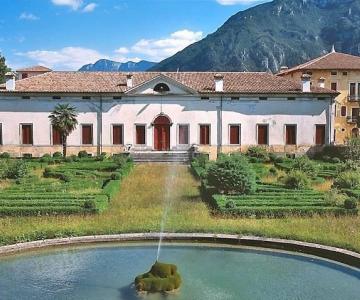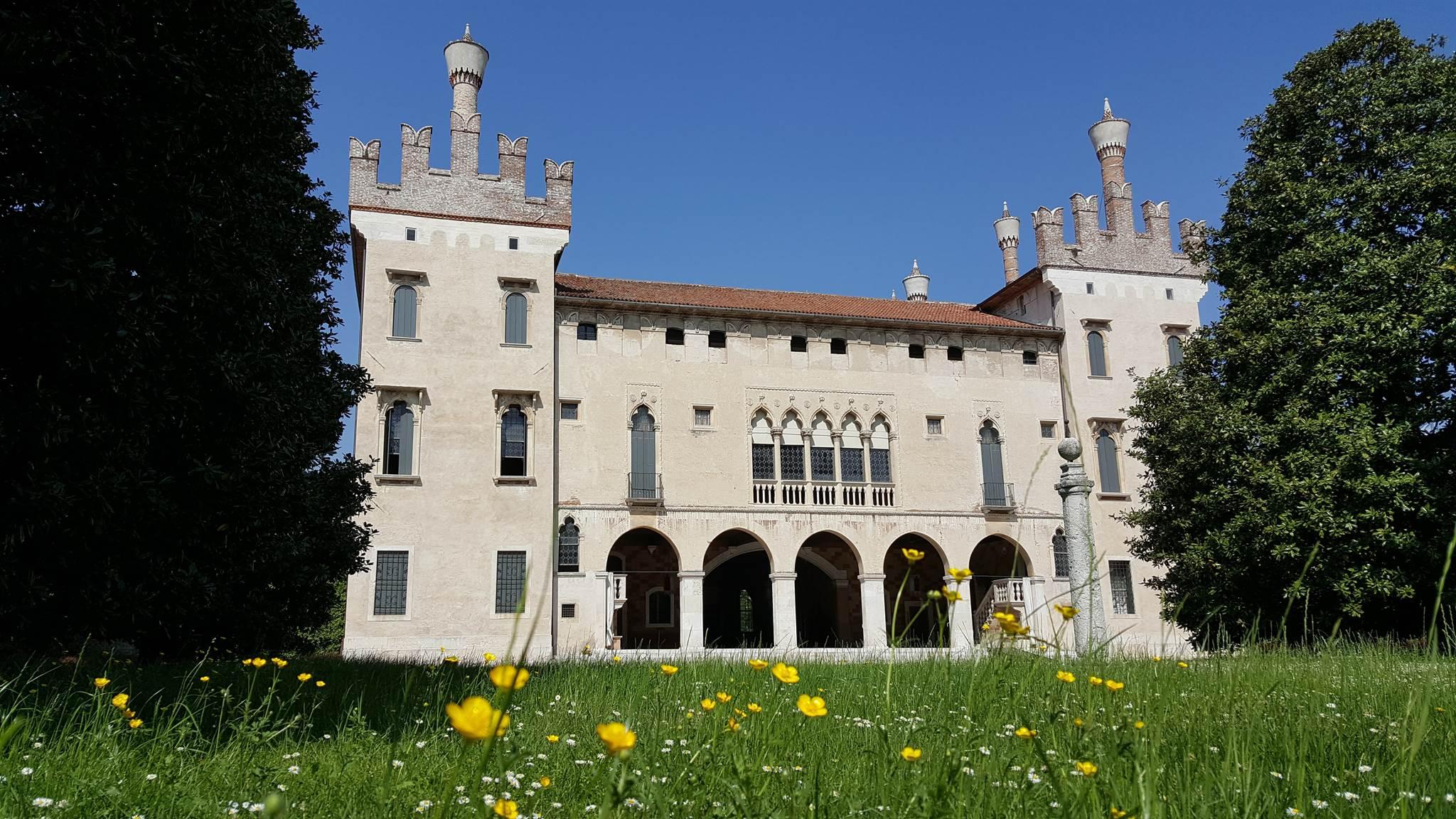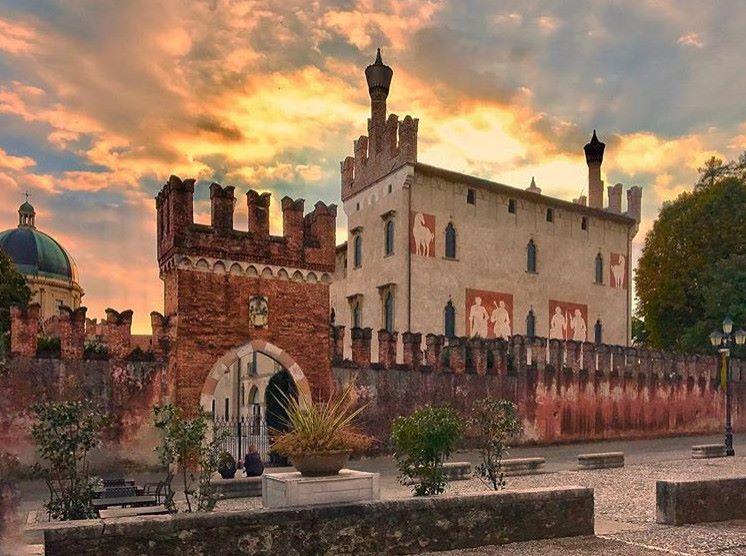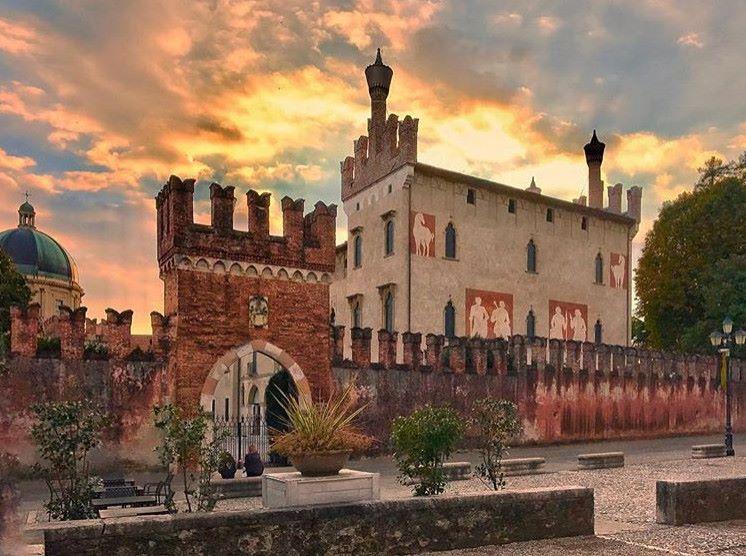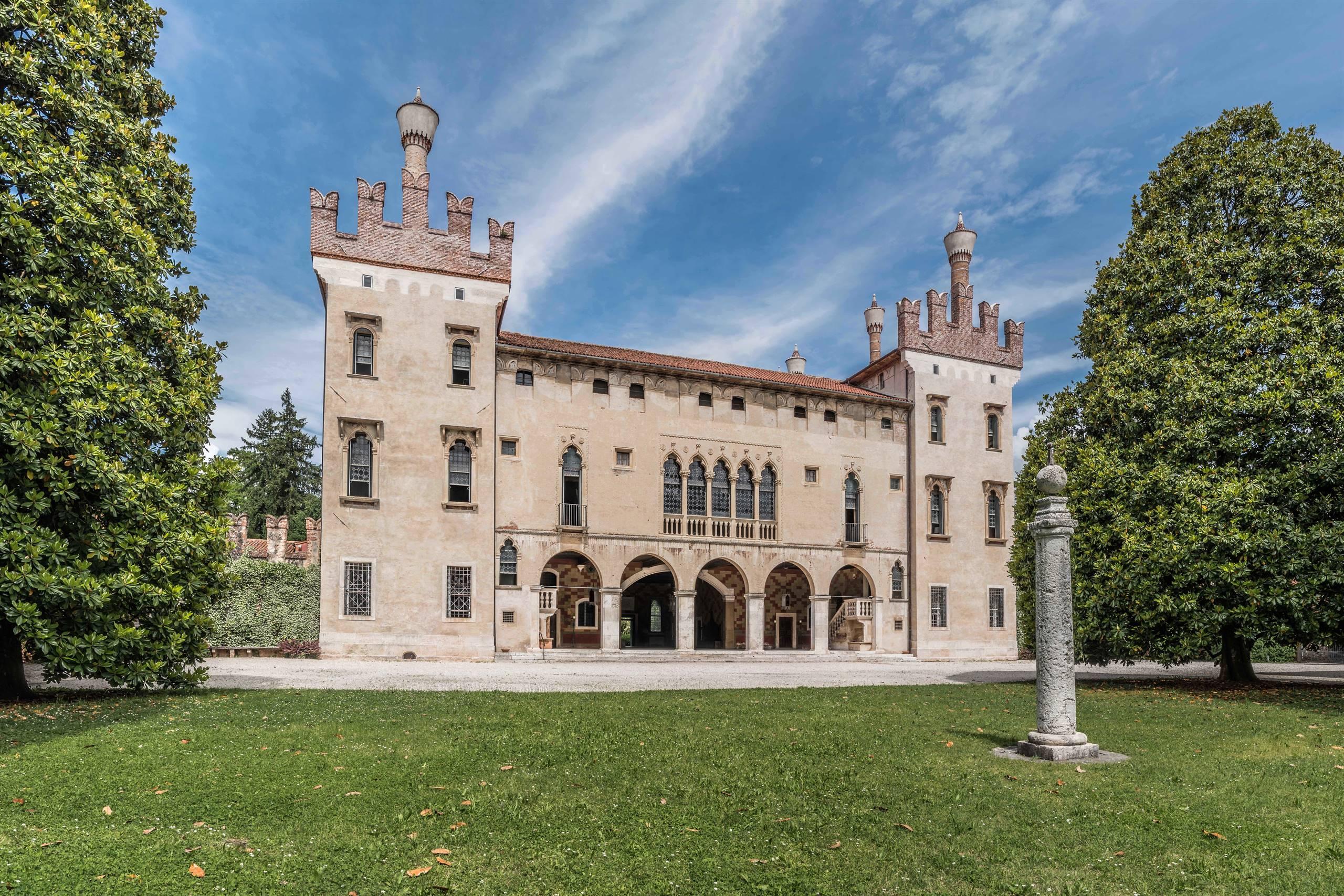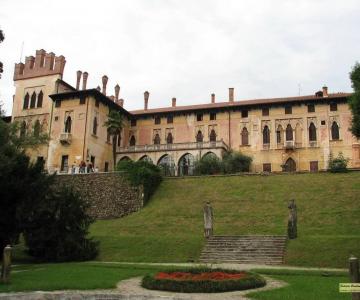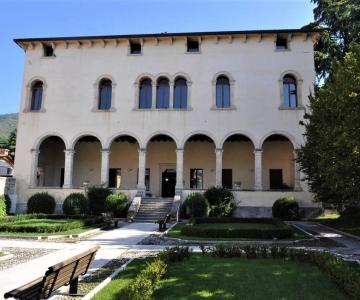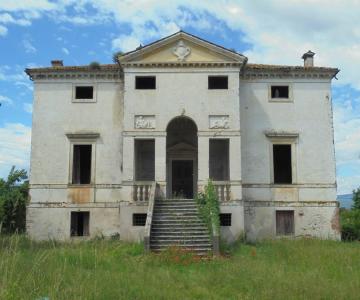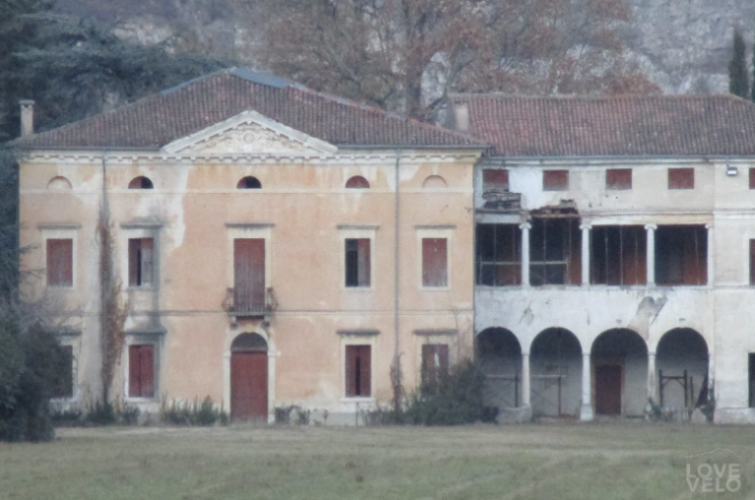
Dating back to the eighteenth century, the villa was inhabited by the Velo counts until the first half of the nineteenth century when it passed to Giuseppina Lampertico, the wife of Count Angelo Valmarana. In 1980, it was transferred to the Ciscato family, owners of Foc Ciscato Spa, which has been involved in forging for over a hundred years.
Villa Valmarana Ciscato underwent two significant architectural interventions: the first in the nineteenth century by Antonio Caregaro Negrin and the second in 1925, following some damage sustained during World War I.
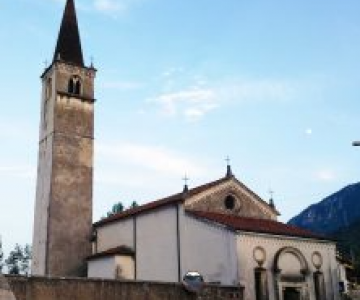
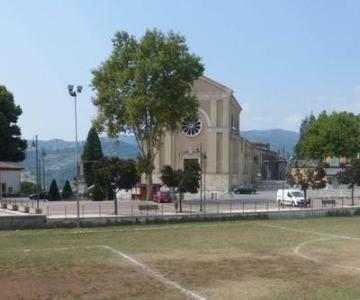
The complex also includes the small church of S. Antonio, designed by architect Antonio Pizzocaro.
Antonio Fogazzaro, who loved the place so much that he had Villa Montanina built, was married to the daughter of the Velo counts, Margherita. Here, in 1885, he wrote and set the Daniele Cortis, transforming Velo d’Astico into Villascura and Villa Valmarana into Villa Carrè.
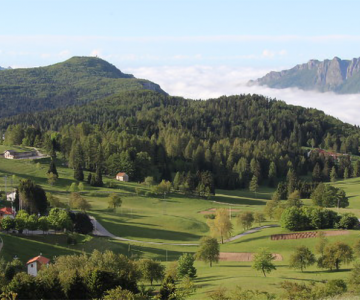
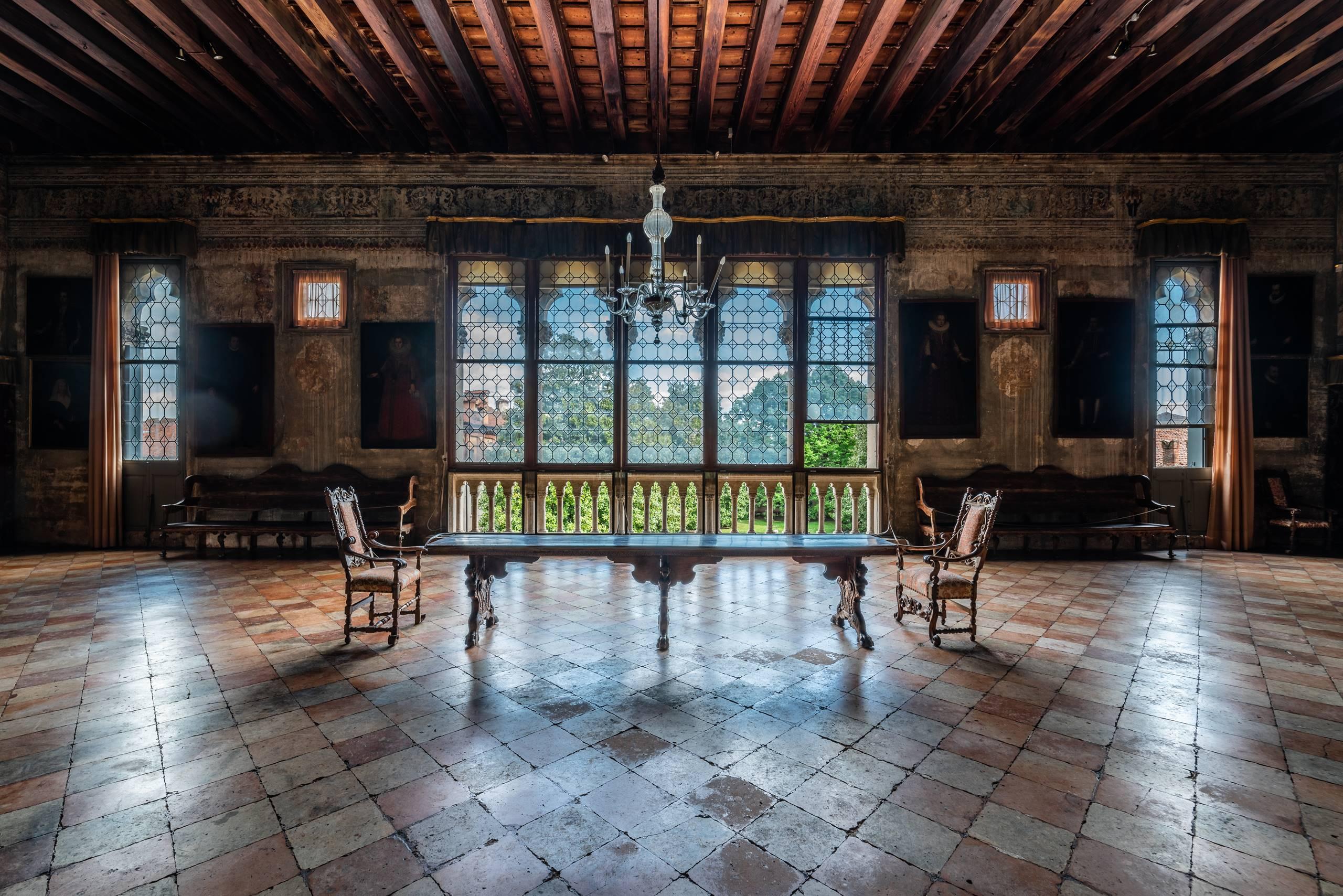
Today, the villa is uninhabited. The characteristic vaulted hall remains, opening into a belvedere facing the four cardinal points: over the Vicentine plain, towards the slopes of Summano, over the Priaforà and towards the Cengio. The coat of arms of the Velo counts is still present on the facade.
For more information click here.