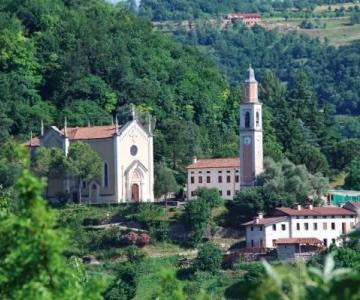
The existence of the communities of Mure and Costavernese has been known since the 12th century, but the first official document attesting to the presence of a church dedicated to St. Stephen, at the site of the current one, is the Regestum Possessionum Comunis Vincenciae from 1262. The period between the 16th and 17th centuries was a time of revival for the community of Mure, finally led by worthy and well-liked priests. Twice, in 1668 and 1675, the parish (then led by Don Giovanni Battista Laverda) received a pastoral visit from Saint Gregorio Barbarigo; it was another illustrious bishop of Padua, Carlo Rezzonico, future Pope Clement XIII, who urged in 1745 the parish priest Antonio Maria Sasso to restore the place of worship. The response of the community was astonishingly swift: in just three years (1745-48), the people of Mure managed to erect a completely new church.
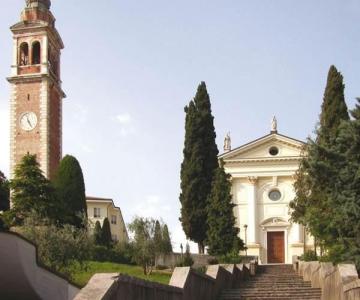
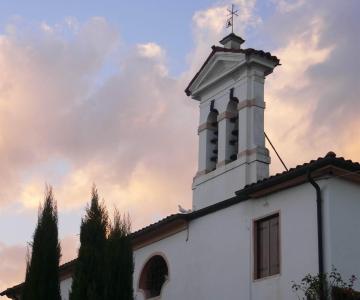
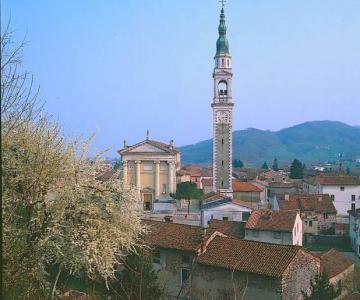
Meanwhile, the structures of the church were completed: from 1838 to 1845 the bell tower was erected, while in the years bridging the 19th and 20th centuries, Don Daniele Cecchini expanded the building itself with the construction of the lateral chapels.
The most recent works have essentially been of conservative restoration: the most significant ones date back to the years 2003-07.
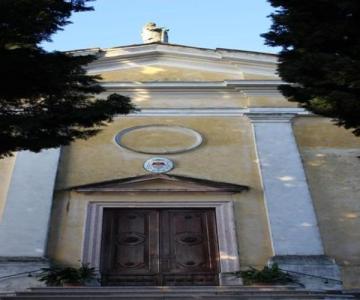
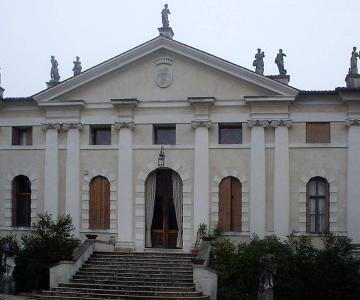
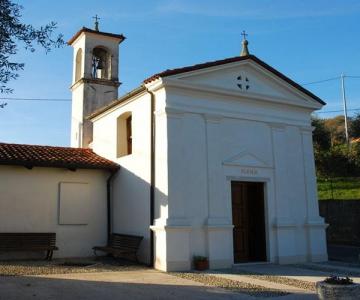
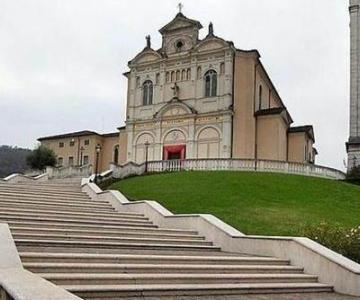
Built almost a thousand years ago as a chapel of a small village at the foot of the Vicentine mountains, the church was completely rebuilt in its current form around the mid-18th century. It is rectangular in shape with an apse facing east, and has five altars. The facade is in the sober and measured style of early 18th-century Venice, which mitigates the excesses of Baroque and, referring to Andrea Palladio, foreshadows Neoclassicism.
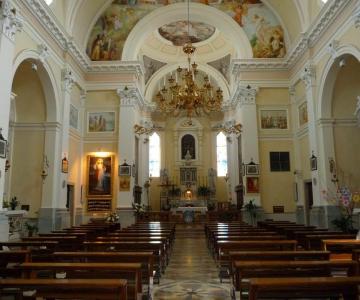
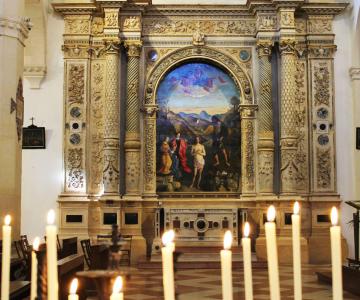
Indeed, the compositional scheme of the façade is classical, divided into three parts by four pilasters that support the entablature and the triangular pediment. In the central part, there is a mosaic with golden tiles depicting the dedication of the Church to the Protomartyr Stephen; in the lateral parts, niches with statues of St. Stephen and St. Valentine. The interior features a single nave (covered by a barrel vault) from which the presbytery and four lateral chapels protrude. The nave is illuminated by four colored stained glass windows depicting the Evangelists, and the presbytery has two stained glass windows with Eucharistic Symbols; a seventh stained glass window, in the small chapel with the Baptismal Font, depicts the Baptism of Jesus. Along the entire nave, there are fourteen little panels of the Way of the Cross, by an unknown author, perhaps a painter from the Venetian romantic school of the 19th century. The main altar is in the Baroque style, evident in the curvilinear forms of the ciborium, which culminates in the statuette of the risen Christ.