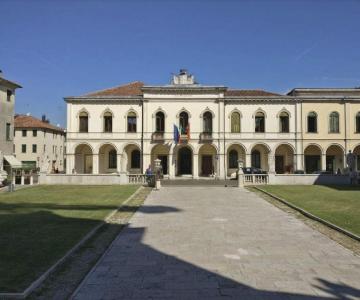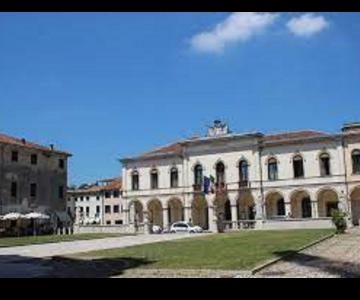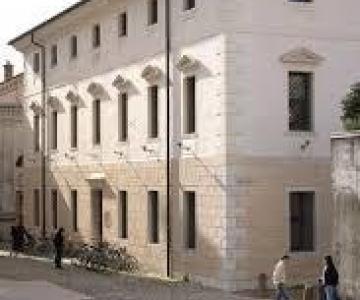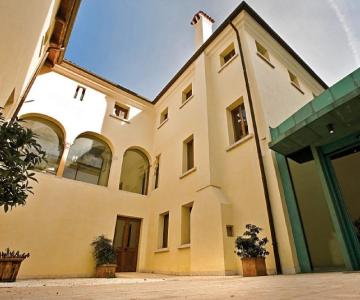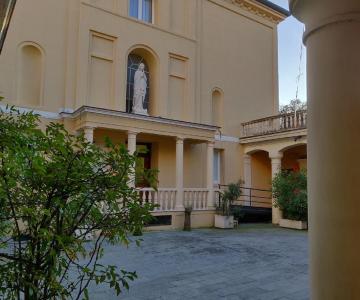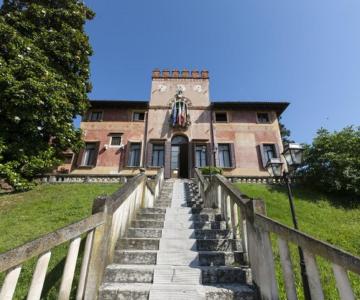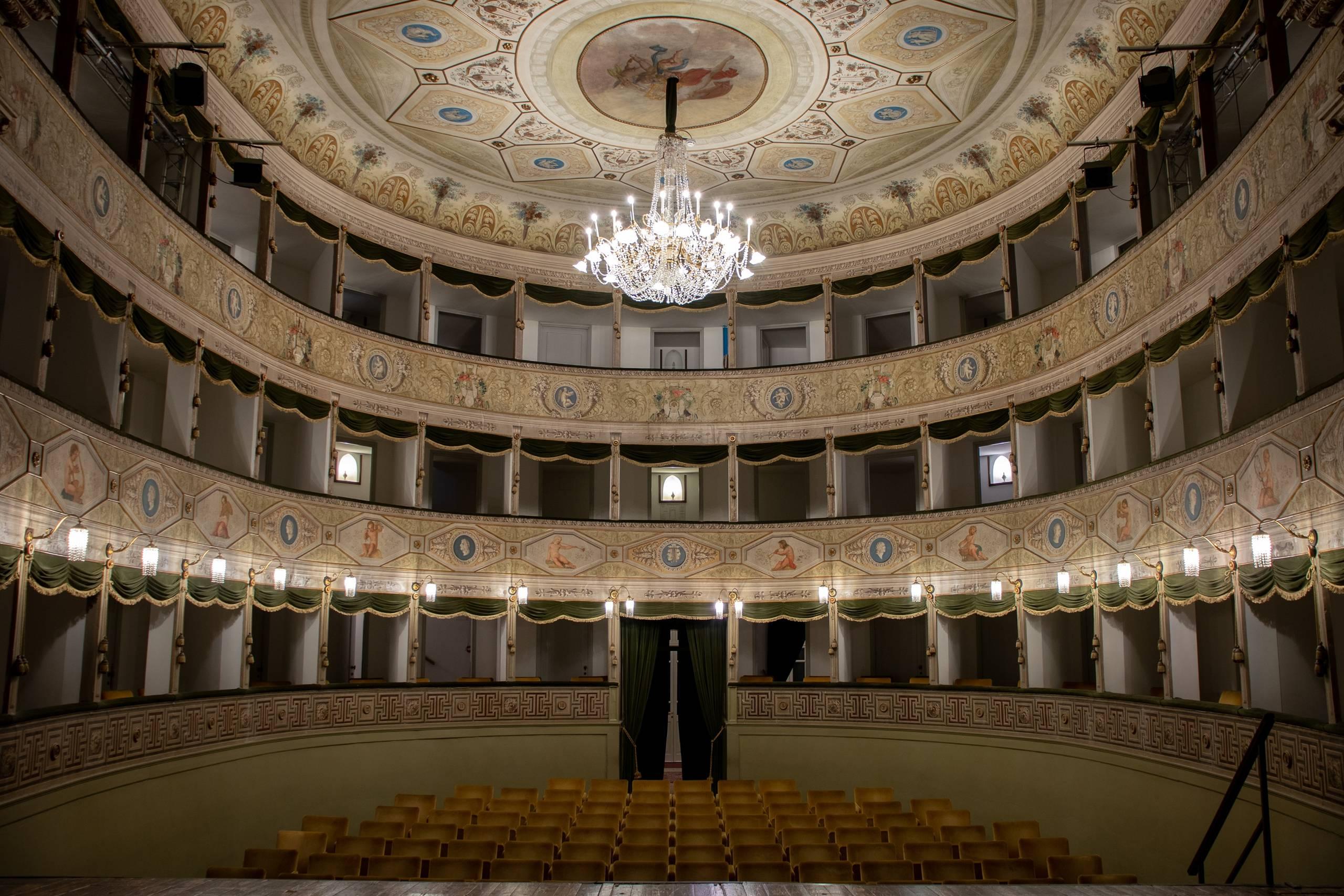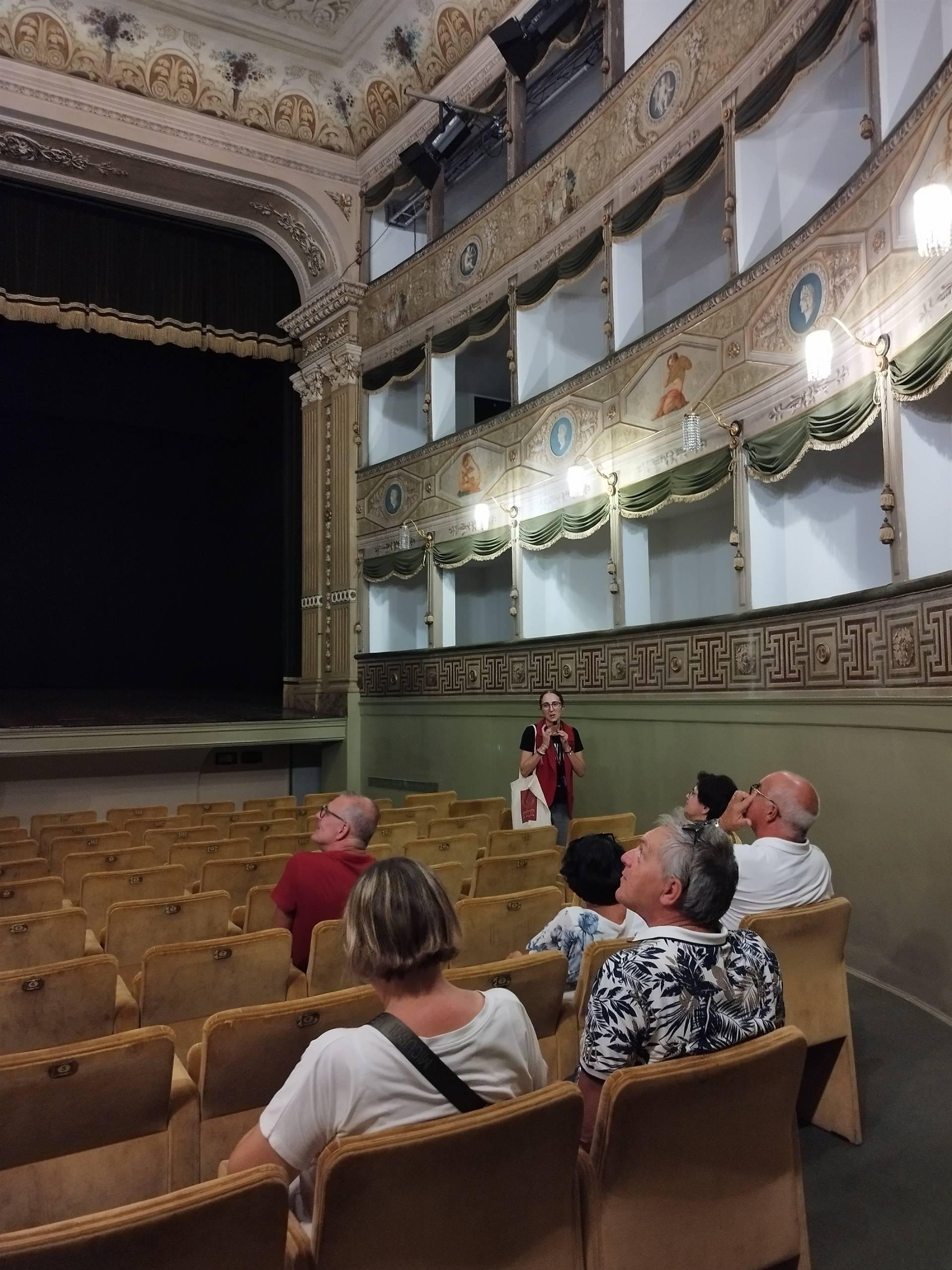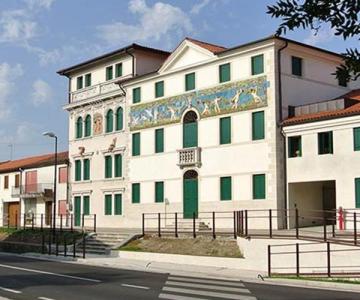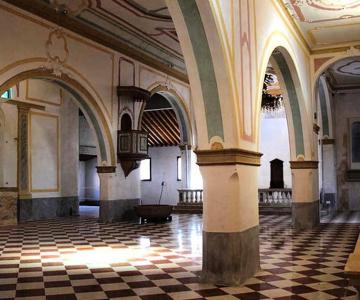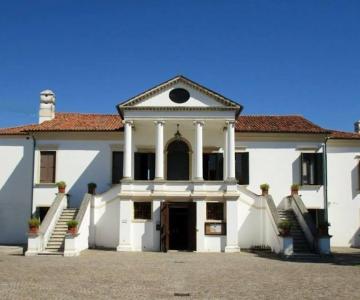


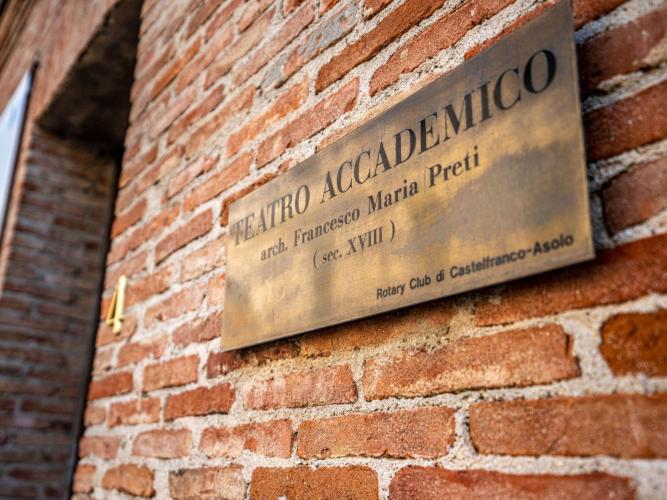
Designed in 1746 by architect Francesco Maria Preti of Castelfranco Veneto (1701-1774), commissioned by the Società degli Accademici, it was built according to Preti's design, between 1754 and 1780, except for the façade and atrium, which were added between 1853 and 1858 to designs by engineer Antonio Barea of Castelfranco, who also designed the interior renovation, which was functional for staging opera performances, during the same period.
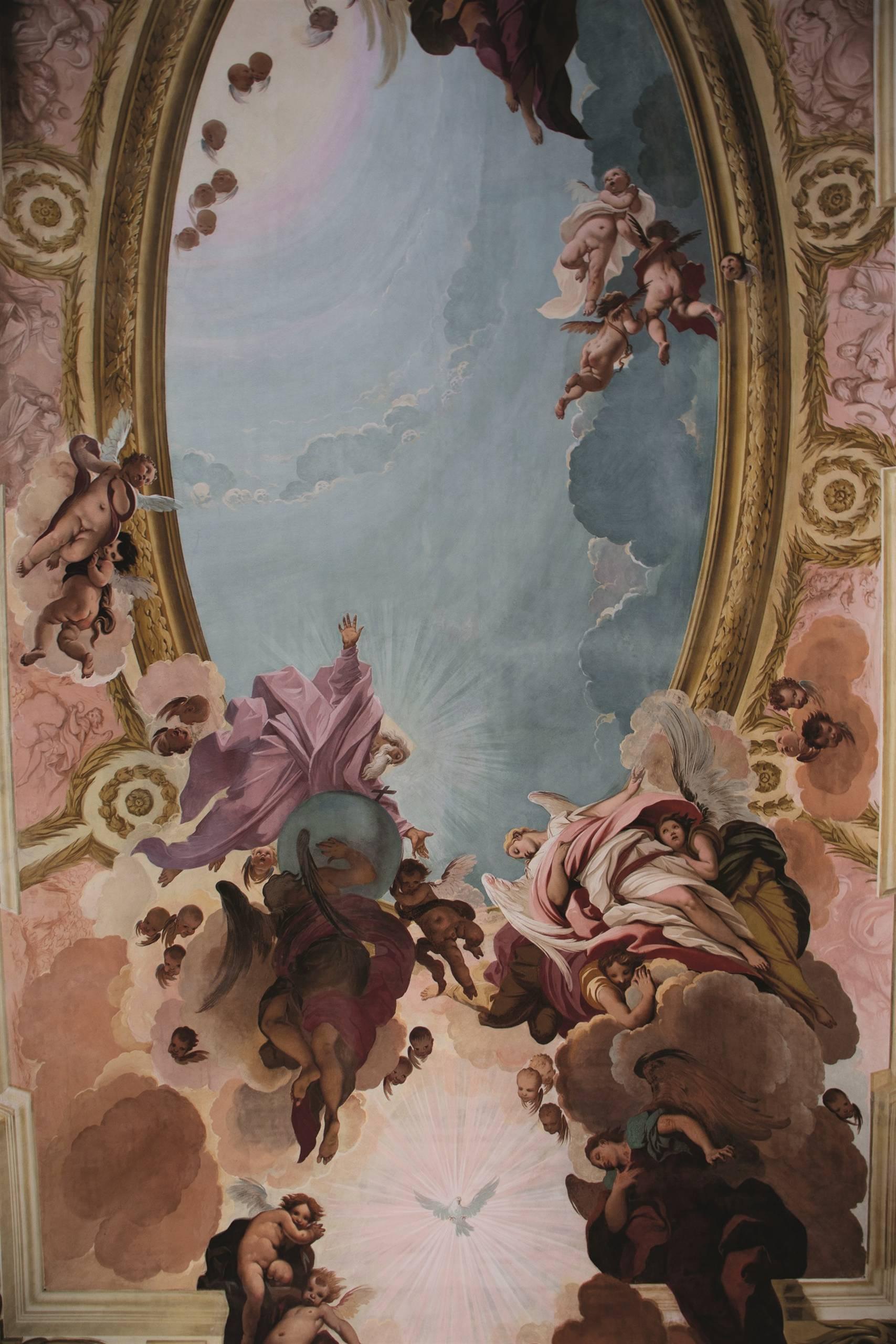
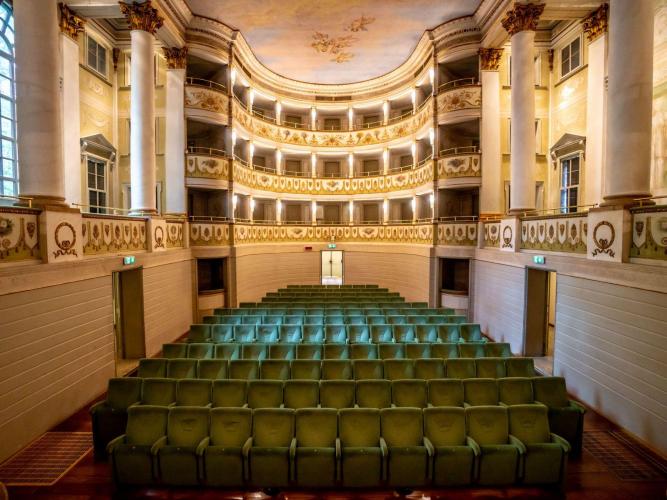
The Theatre is one of Francesco Maria Preti's earliest and most successful achievements. It's architectural originality lies in its dual function as a theatre hall for shows and musical performances at night and as a hall for daytime meetings of the Academicians. As in the Cathedral of S. Liberale, in the theatre Preti applied the Proportional Harmonic Mean, a mathematical rule that allows for optimal acoustics. The entire interior, in Preti's original design, responds to mathematical canons: the square of the stalls, the semicircle of the boxes, the cube of the auditorium, the equal rectangles of the loggias and the proscenium. Two symmetrical lateral loggias, supported by Corinthian columns, overlook the stalls and frame as many round-arched serlianas flanked by windows crowned by pediments. Frescoed on the ceiling is the allegory of Immortality seated between Virtue and Glory dispensing laurel wreaths to men of letters, scientists and artists born in Castelfranco, the work of Venetian painter Sebastiano Santi. The atrium and façade, designed by Barea, were completed in 1858.
Today the theatre hosts numerous events including a prestigious Prose Season and the Classical Season of the 'A. Steffani' Conservatory.