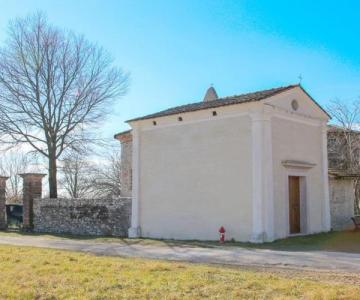
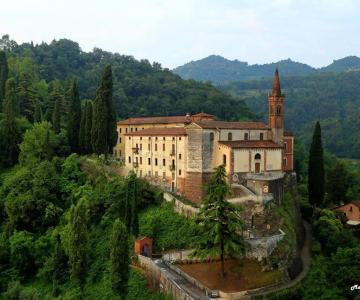
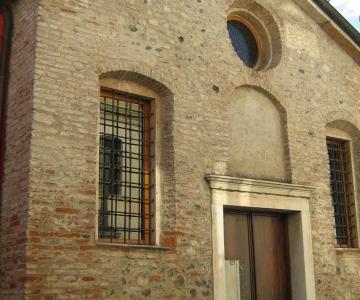
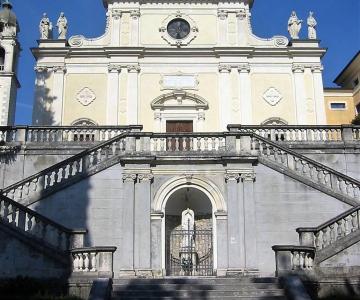
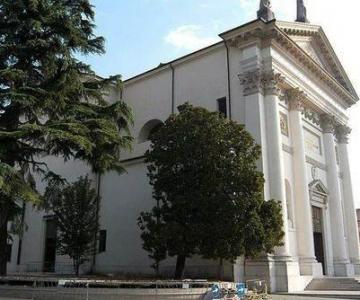
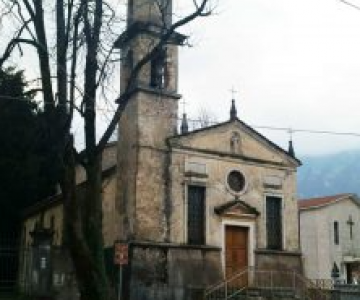
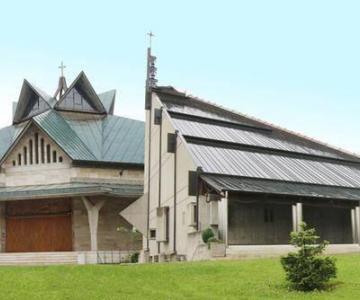
This site housed an early Benedictine settlement, documented from 1259. Subsequently, the religious refoundation of the place was thanks to minor friars around 1483-1486. The church was consecrated in 1494.
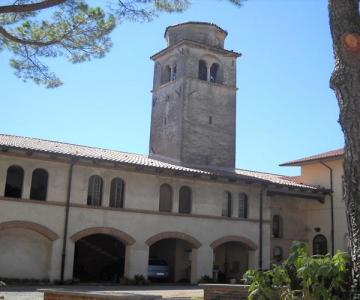
The original complex was modest in size. Later it was enlarged: the two porticoed cloisters with a cross vault date back to 1640-1645. The body was enlarged to the south and the bell tower was raised. During the eighteenth century the church, which had two naves, was enlarged to the north with an additional chapel and reached the number of eight altars.
After the Napoleonic suppression of the convent (1810), the progressive ruin of the church and the cloistersn began (of it there remain some traces of the apse with pointed arches),while the bell tower collapsed due to lightning in 1936.
The many works of art were also ruined, including those of Jacopo dal Ponte (1510 c. - 1592), called the Bassano, and Felice Cignaroli who once embellished the convent complex. Some frescoes in the lunettes under the portico of the two sides of the cloister remain visible, depicting biblical episodes and the life of Saint Francis.