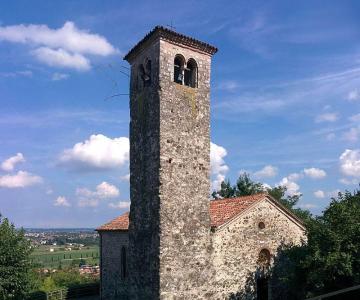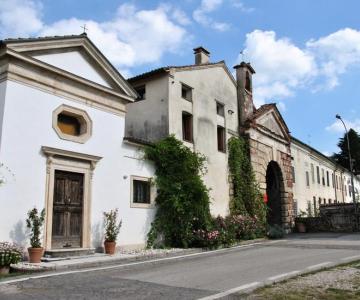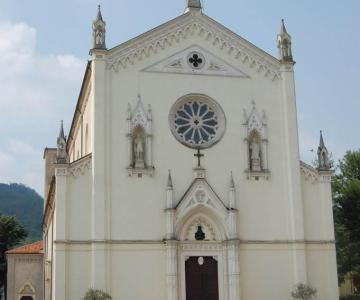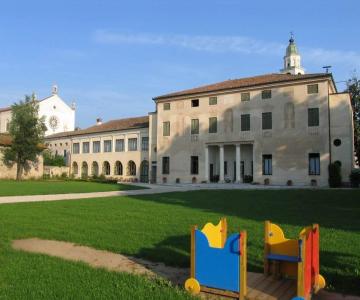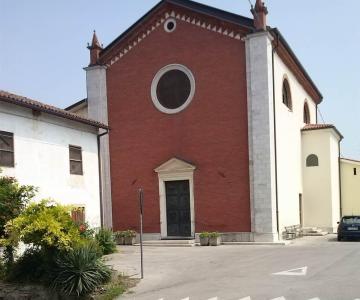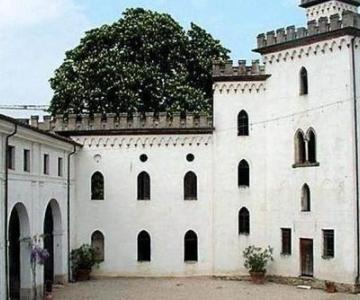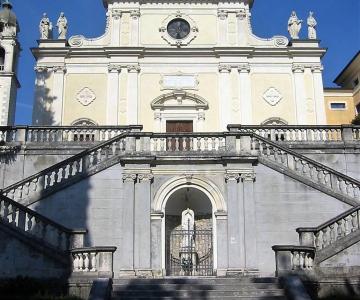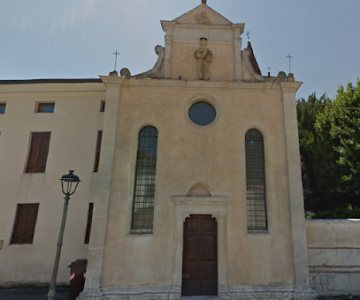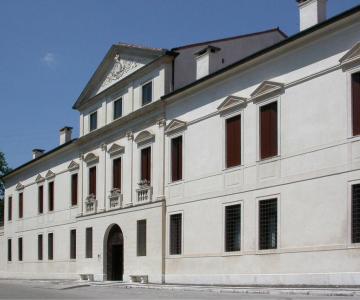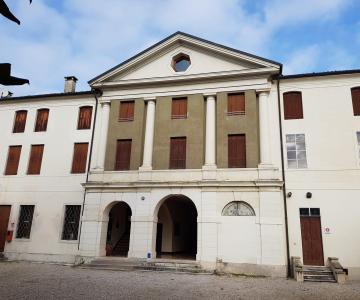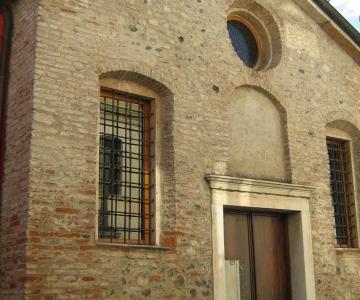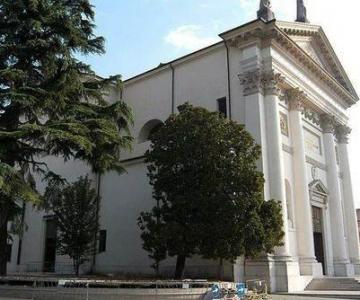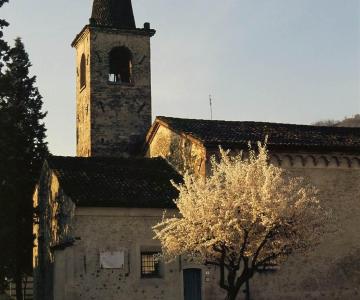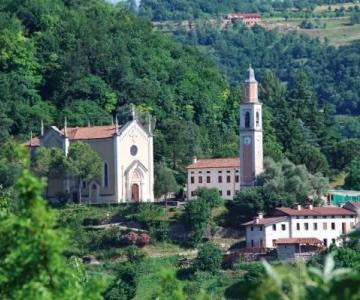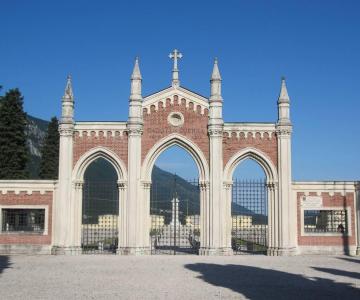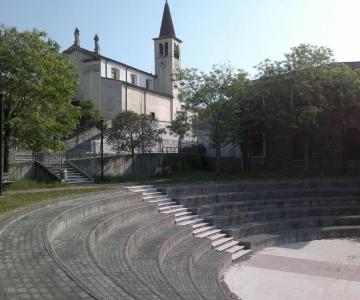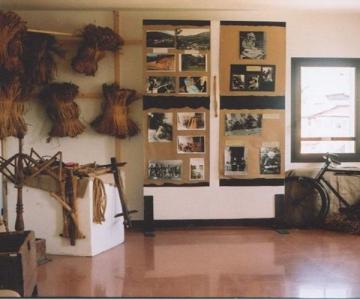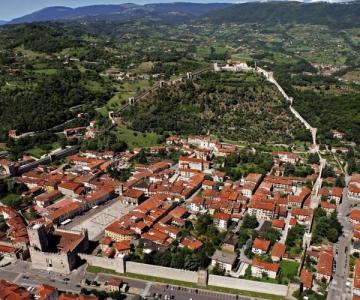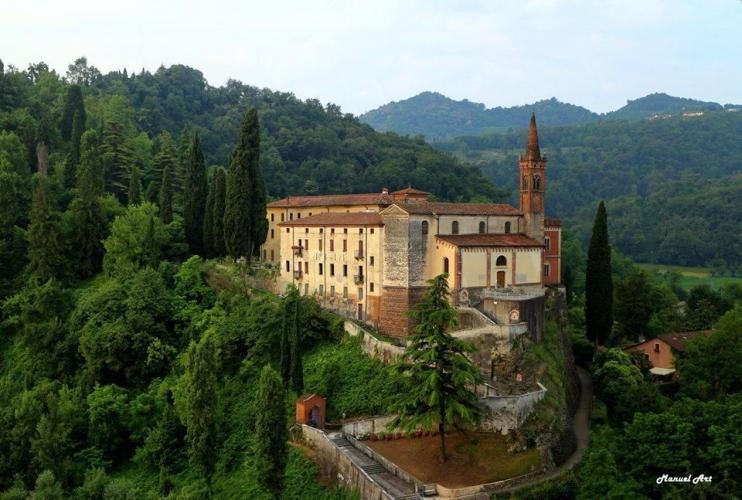
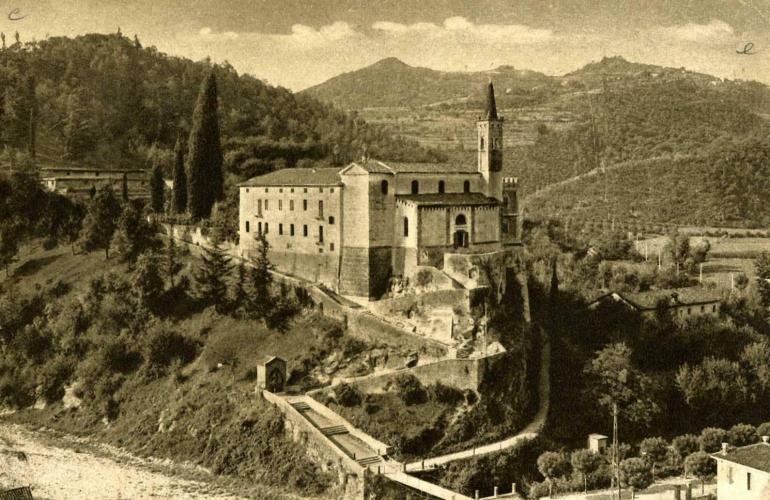
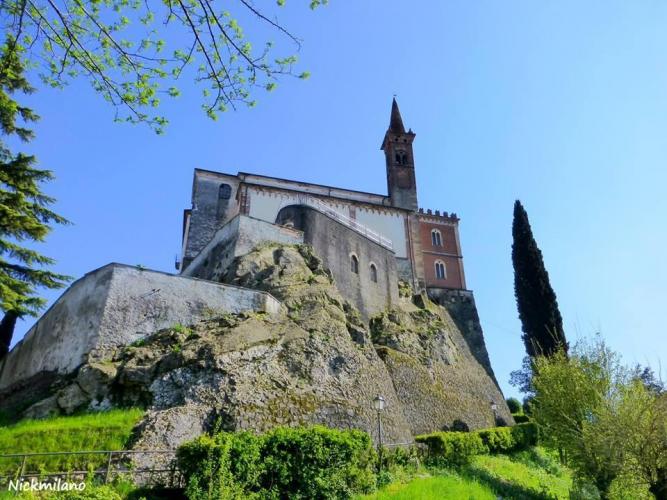
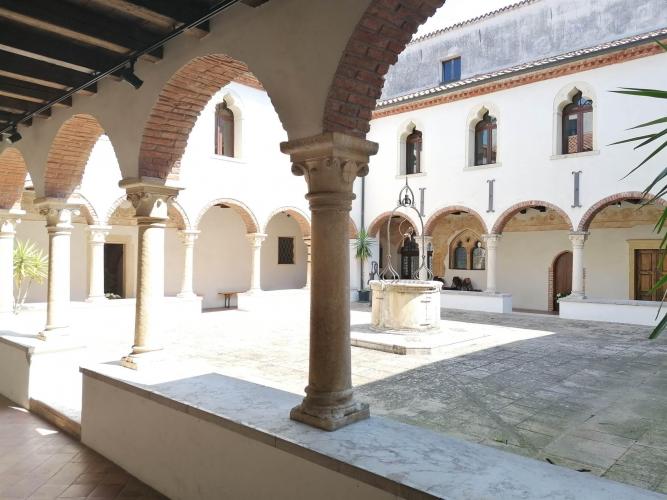
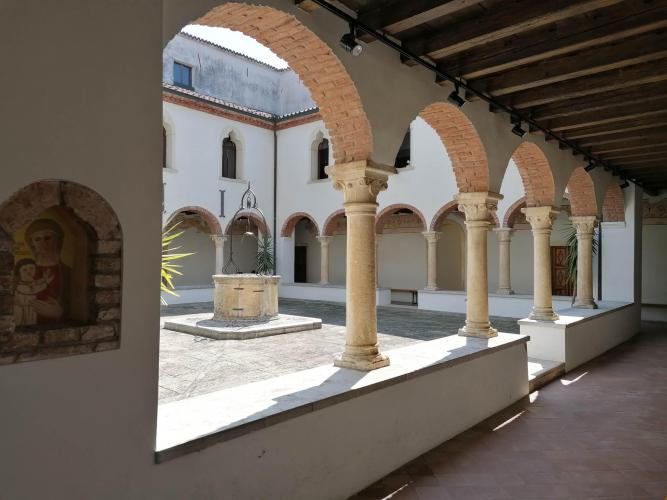
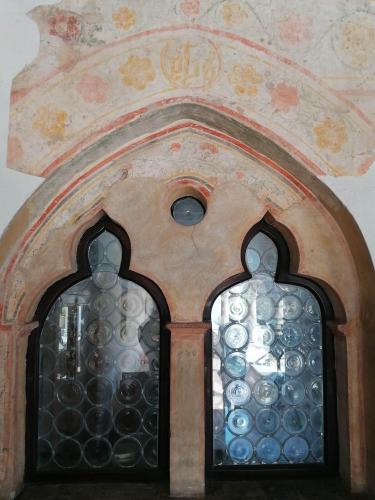
The Church of Santa Maria del Cengio was first mentioned in 1192 in the Liber Censuum, probably because it originated as a parish, as a resting place for travelers, or as a chapel of the ancient castle. In 1273, the church was looked after by a priest, while by 1334 it had passed to the vicar chaplains appointed by the rectors of the archdeacon of the cathedral of Vicenza.
Around the middle of the 15th century, the first donations for the construction of a place for the accommodation of the friars or hermits were made: in 1456, with episcopal authorization, the conventual life began, leading to the restoration of the church and the construction of the main altar.
In 1462, the convent passed from the friars of the Order of Saint Bridget to the canons of San Salvatore of the Order of Saint Anthony, who remained for over three hundred years. In 1466, the convent incorporated the nearby parish church of San Pietro, located in the plain, from which it took the right to appoint and maintain a priest.
During the 18th century, the Republic of Venice issued three ordinances that had an irreparable effect on the convent's activities: in 1768, the church regained independence from the convent, as it was before 1466; in 1771, the monasteries of the Lateran Canons were suppressed, followed by the Canons residing in Isola Vicentina. The property remained with the Porto family, which had received the jus patronatus in 1465, thanks to the support given to the convent.
In the early 20th century, it was decided to entrust the management of the convent to the Servites of Mary, who were already present at the Sanctuary of Madonna di Monte Berico. During World War I, some soldiers were accommodated, a hospital was set up, a shelter for families was provided, and the elementary schools of the village were temporarily hosted.
In September 1931, the convent was the victim of a severe fire that seriously damaged the structure, leading to the subsequent demolition of some portions of the building. The convent and the church remained unusable for six months, but by December 1931, the church resumed officiating.